
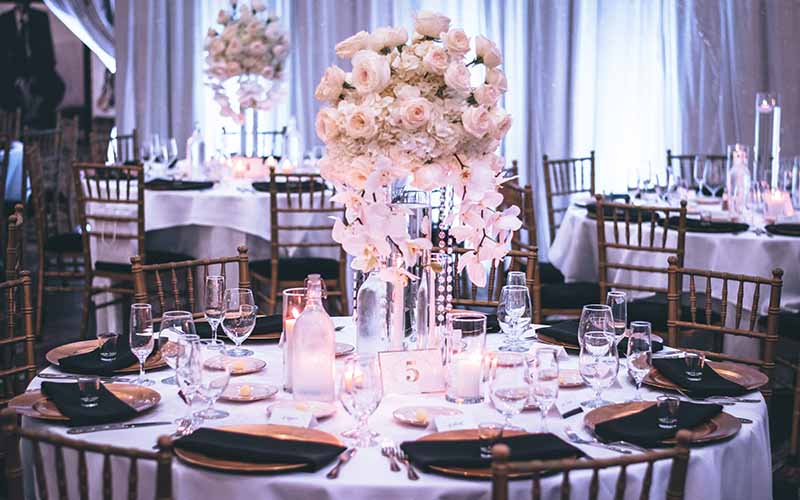
Well, crap! You’ve started looking through the wedding guest list and you realize that your partner’s favorite cousin has decided to bring the girlfriend that blew up at your sister at your birthday dinner a few years ago. Not to mention both of your parents are divorced and remarried, and your college friends are split 50/50 in the married vs single categories. How will you get the wedding reception to go off without a hitch?! Creating a detailed plan can be a bit overwhelming at first, but don’t worry, we’ve got you covered on all the wedding reception seating etiquette you need to know.
Assigned Seating Vs Seat Yourself
I know you’re asking yourself; “Do I really need to assign seats to a bunch of adults?” And the short answer to that question is … it depends. Will your 350 guests find their seats eventually? Of course, and if you’ve put out enough seats it should, in theory, work itself out. The real question is do you want things just “working themselves out” on your big day? Probably not. Not only does a detailed seating chart take away the extra burden on your guests to decide where to sit, it also ensure that tables are filled to capacity and thus precious table space is not wasted.
There is of course an exception to this rule (isn’t there always?). For weddings with less than 50 guests, a “seat yourself” plan is not a terrible idea. A wedding that is small and intimate likely means that your guests have already interacted with each other to some degree and won’t have as much difficulty choosing who they want to spend the evening seated beside.

Before You Sit
Now that you’ve decided to go with a detailed seating chart it’s time to make actual decisions on the seating arrangements. You will need to choose between the table shape, layout, and number of seats per table, all before you can decide how to group your guests.
Table Shape
When it comes to table shape there are four common options that all have their own benefits. Most couples choose between round, rectangle, oval, and square. Round tables tend to be most common as they offer more space and leg room while also making it easy for guests to chat across their table.
Table Layout
Determining where the tables will go in your reception space is equally as important as the seating chart. You want to ensure there is ample room to walk between tables andthat no one is too close to the bathrooms or trash cans. You should also consider the views of the bride and groom each table will have. More often than not, the wedding party, family, and closest friends will be at the tables nearest the newlyweds. If at all possible, speak to your venue about the layouts other brides have used. Odds are they will have plenty of suggestions to give you, to make sure they can accommodate you and your guests.
Seats Per Table
Determining how many people should be seated at each table is a pretty straightforward task. If the company you are renting tables from does not give you a guestimate to how many guests can fit around the table, putting a few chairs around it in advance is an easy solve. Remember your guests don’t want to be cramped at your wedding (it makes it harder to get to the dance floor and boogey). So, when it comes to determining the number of seats to put at each table go one less chair and not one more chair. Even if your seating chart is wonderfully thought out, no one wants to be touching knees with their neighbor all night.
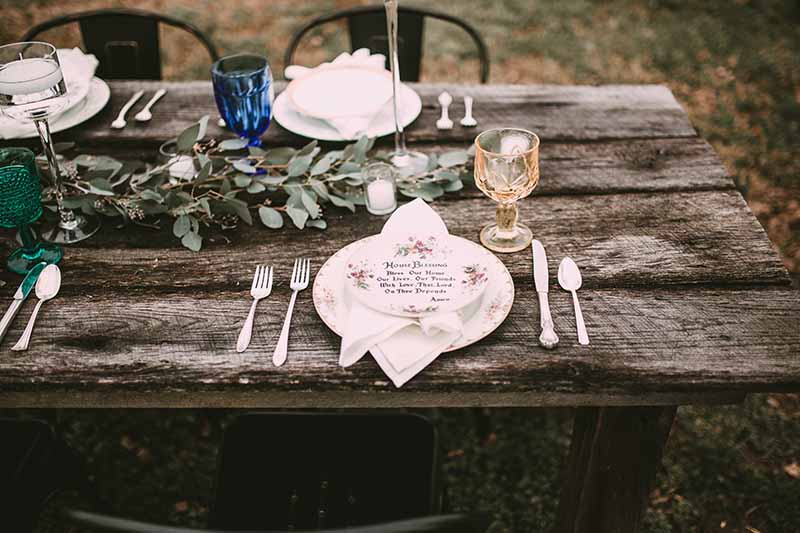
“You May Be Seated”
It’s time to let the real work begin! You’ve made all of the easy decisions, now let’s get into creating a well-rounded seating chart. (No Pun Intended)
Newly-Weds and Wedding Party
There are lots of options when it comes to seating the newly-weds and wedding party. Couples may choose to have their own private table and be the focal point of the reception. While others may choose to leave a couple of seats open at each table so they can spend time with all of their guests. Larger venues may even accommodate placing one long rectangular table at the focal point of the room for the couple and the entire wedding party. No matter which layout you choose, you and your significant other should be the focal point and should be surrounded by your wedding party.
Family and Close Friends
Next group to sit would be close family and friends. They should be the second closest to the couple, if not as close as the bridal party. The bride’s family and the groom’s family typically sit on opposite sides of each other. These tables are filled with grandparents, cousins, aunts, uncles, etc. For parents who are divorced, give each parent a table to fill with their “people”. This keeps things from being too awkward and diffuses any potential issues before they arise. Your close friends that didn’t make it into the wedding party, should also be at a table nearest the family.
Singles vs. Couples
Behind your mom, dad, and your favorite sorority sisters, there is the infamous singles’ table and couples’ table. While not everyone is a fan of having a singles and a couples table, they tend to be a bit necessary. It can be difficult to get a seating chart down when you have to seat packaged deals (aka couples). You may even want you and your significant other’s single friends to mingle and mix at their own discretion. In my humble opinion, the singles table is a must! Separating these two groups is also beneficial because couples will have more topics in common to talk about and same with the singles crew.
Seating Kiddos
Easiest solution for sitting kids is if there are multiple, sit them at a kids table together. If your wedding is kid free, minus the flower girl and ring bearer, sit them with their parents or closest relatives.
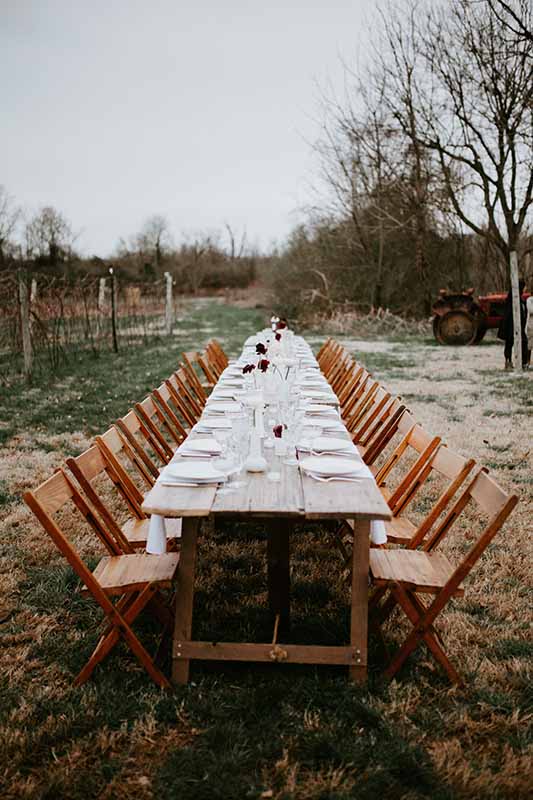
Telling the People Where to Go
Last thing to cover when it comes to reception seating etiquette is telling people where to go. There are three options that tend to be common. Place cards, escort cards, and a seating chart. Keep reading for a breakdown that’ll help you pick the right choice for your big day.
Place Cards
Place cards are the most specific option of the three. You are essentially assigning guests down to their exact seat. The pros of place cards are that they (again) make sure each table is filled and accounted for. They also make for beautiful pictures and truly make your guests feel as though each one of them were hand-picked to be a part of your special day. The biggest con is the time and/or cost commitment to getting place cards done and put out at teach table. If you have 300 guests at your wedding it could take hours on end to get the place cards labeled and set out.
Escort Cards
Escort cards tend to be the more modern way of doing things. For escort cards, names are arranged alphabetically to make it easier for guests to locate their names. Once their name is found there is a table number placed at the end, to designate their seating. This option has pros and cons. The biggest pro being that it’s easier, than the previous option, for guests to find their name, and thus find their seat. Wedding reception etiquette says that guests typically find their own seat once they get to their table.
The Seating Chart
The last option to consider, is a seating chart. I mean after all you worked hard to get everyone to the perfect place, you deserve to put that board on display! With seating charts try to keep things alphabetical and visual. The top portion of the board should be similar to the escort card layout, while the second half of the board have a diagram with each table being labeled. You can customize this option even further and have place cards at the table when guests get there.
Final Thoughts
No matter how well thought out your seating arrangements you will likely have to switch something up or make last minute accommodations. Do your best to handle the situation but don’t let it stress you out! At the end of the dinner, people are going to get up and walk around and head to the dance floor anyways. Once you have the seating chart locked and loaded it’s time to pick the perfect song for your first dance and, well, all of your reception music. Check out our post “How to Choose Weddings Songs for a Memorable Reception”.
If you’ve gone down a spiral of wedding planning and you haven’t even sent out invitations yet, fear not, we’ve got you covered from A-Z. You can start your wedding planning journey by checking out our article, “Wedding Invitation Etiquette Do’s and Don’ts”.